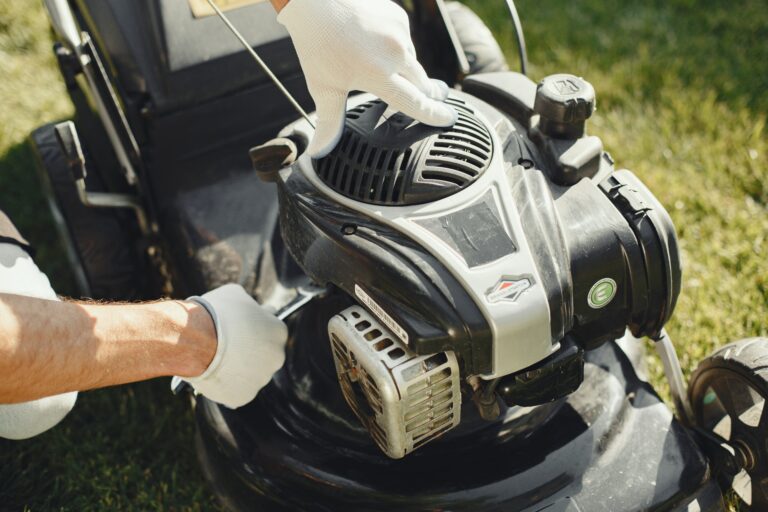

Hey y’all, it’s your boy Jeff here with a funny story about the time I tried to change the blades on my lawn mower and ended up over-torquing them.
It was one of those hot summer days where the sun was beating down mercilessly and the air was so still and sticky you could barely move. I had been putting off changing the blades on my lawn mower for a while, but with the grass growing taller by the day, I knew I couldn’t delay any longer.
I gathered my tools and headed out to the garage, determined to get the job done as quickly as possible. I carefully removed the old blades and set them aside. Then, I grabbed the new blades and my torque wrench and got to work.
I tightened the bolts to what I thought was the correct torque value, double-checked to make sure everything was secure, and stepped back to admire my handiwork.
At first, everything seemed fine. The blades were tight and the mower was running smoothly. But then, as I was mowing the lawn, I noticed something strange.
The mower seemed to be struggling more than usual, and there was a strange whirring noise coming from the blades.
I stopped the mower and took a closer look, and that’s when I saw it: the blades were bent and out of alignment. “Oh no,” I groaned, realizing that I had over-torqued the bolts and damaged the blades.
Feeling a little sheepish, I trudged back to the garage to grab some new blades. I had always known that torque was important when it came to mower blades, but I had just gotten a little carried away.
Lesson learned: always be careful and follow the manufacturer’s recommendations for torque values.
What is the Torque for Toro Lawn Mower Blades?
The torque for Toro lawn mower blades varies depending on the specific model and type of mower. In general, most Toro lawn mowers require a torque value of between 30 and 40 foot-pounds for the blade bolts.
It’s important to refer to the manufacturer’s instructions or a repair manual to determine the correct torque value for your specific model. Using the wrong torque value can cause damage to the blades and may even affect the performance of the mower.
Which Way Does a Toro Blade Go On?
To determine which way a Toro blade goes on, it’s important to consult the manufacturer’s instructions or a repair manual.
In general, most Toro lawn mower blades are marked with a “top” or “up” side, which should face upwards when the blade is installed on the mower.
Additionally, many Toro blades have a specific orientation that must be followed in order to ensure proper cutting performance. It’s important to pay attention to the blade orientation and to follow the manufacturer’s recommendations to ensure that the blade is installed correctly.
FAQ
What Happens if I Use Too Much Torque on Lawn Mower Blades?
Using too much torque on lawn mower blades can have several negative consequences. The most obvious problem is that it can cause the blades to become bent or out of alignment, which can affect the performance of the mower.
Using too much torque can also cause the blade bolts to become stripped or damaged, making it difficult to remove the blades in the future.
Additionally, using too much torque can put unnecessary stress on the blade and mower deck, which can cause these components to wear out more quickly. It’s important to use the correct torque value to ensure that the blades are tightened properly and to avoid damaging the mower.
Is it Possible to Use Too Little Torque on Lawn Mower Blades?
Yes, it is possible to use too little torque on lawn mower blades. If the blade bolts are not tightened enough, the blades may become loose or wobbly while the mower is in use.
This can affect the performance of the mower and may even cause the blades to come off completely, which can be dangerous. It’s important to use the correct torque value to ensure that the blades are tightened properly and to avoid any problems while mowing.
Do I Need a Torque Wrench to Change Lawn Mower Blades?
While it is not strictly necessary to use a torque wrench to change lawn mower blades, it is generally a good idea.
A torque wrench allows you to apply the correct amount of torque to the blade bolts, which ensures that the blades are tightened properly and prevents damage to the mower. If you do not have a torque wrench, you can use a regular socket and ratchet to tighten the bolts, but you should be careful not to overtighten them.
It’s a good idea to consult the manufacturer’s instructions or a repair manual to determine the correct torque value for your specific model.
Conclusion: Torque it Up, But Don’t Overdo It
In conclusion, it’s important to use the correct torque value when tightening lawn mower blades. Using too much or too little torque can cause problems and affect the performance of the mower.
Be sure to consult the manufacturer’s instructions or a repair manual to determine the correct torque value for your specific model, and use a torque wrench or a socket and ratchet to tighten the bolts to the correct value.
With the right amount of torque, your blades will stay put and your mower will run smoothly. Just don’t get carried away like I did!