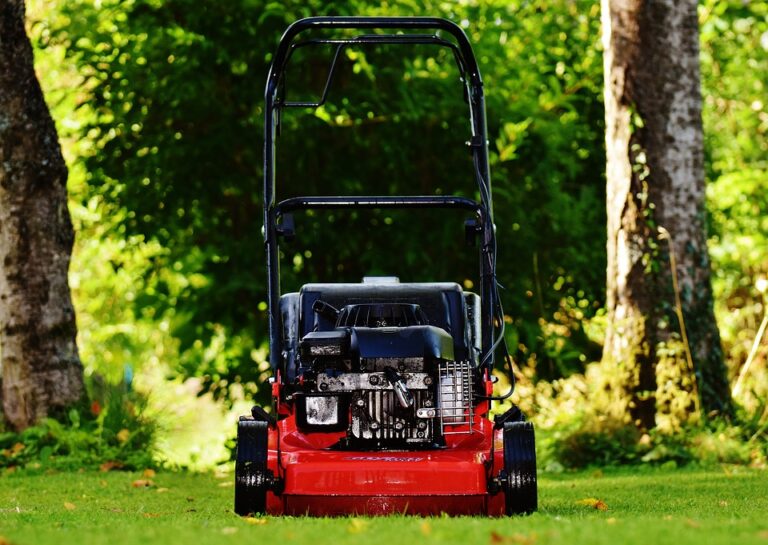

Hey y’all, it’s Jeff here. Let me tell you about the time I learned the hard way that the orientation of your lawn mower blades can make a big difference.
So, I had this old push mower that I inherited from my grandfather and it was starting to leave uneven cuts on my grass. I figured it was probably just because the blades were unbalanced, so I decided to fix it myself.
I got out my trusty tool set and started disassembling the mower. Now, I consider myself to be pretty handy, but let’s just say things didn’t go quite as planned.
I managed to get the blades off and set them on the ground to try and balance them. I put a pencil under the middle of each blade and watched to see which way they tilted.
Well, I must have gotten a little too confident because I ended up knocking over one of the blades and it sliced right through my hose.
Water went everywhere and I ended up soaked from head to toe. My neighbors must have thought I was trying to recreate that famous scene from “A Christmas Story” where the kid gets his tongue stuck to the pole.
Needless to say, I learned my lesson and now I always take my mower blades to a professional to get them balanced.
But as it turns out, blade orientation is just as important as balance. Keep on reading to find out why.
Which Way Should Mower Blades Face?
The orientation of your lawn mower blades can have a big impact on how well your mower is cutting your grass.
In general, mower blades should be facing downward and toward the front of the mower. This allows the blades to effectively cut the grass and disperse the clippings evenly.
If your mower blades are facing the wrong way, it can cause problems with grass cutting and can even damage the mower itself.
For example, if the blades are facing upward, they can catch on debris and rocks, which can cause them to become damaged or bent. It’s important to make sure that your blades are facing the correct way to ensure that your mower is working efficiently and effectively.
Should Mower Blades Face the Same Direction?
Yes, mower blades should be facing the same direction. If one blade is facing a different direction than the other, it can cause problems with balance and grass cutting.
It’s important to make sure that both blades are facing the same way to ensure that your mower is working properly and cutting your grass effectively.
If you’re not sure which way your mower blades should be facing, it’s a good idea to consult your mower’s owner’s manual.
Most manuals will include information on blade orientation and how to properly align the blades. If you don’t have your manual, you can often find one online or you can ask a professional for help.
FAQ
How can I tell if my mower blades are facing the right way?
One way to tell if your mower blades are facing the right way is to look at the direction they are cutting the grass.
If the grass is being cut evenly and the clippings are being dispersed evenly, it’s likely that your blades are facing the correct way. If the grass is being cut unevenly or the clippings are not being dispersed evenly, it’s possible that your blades are facing the wrong way.
Can I change the orientation of my mower blades myself?
Technically, it’s possible to change the orientation of your mower blades on your own, but it’s not recommended.
Changing the orientation of your blades requires special tools and knowledge, and attempting to do it yourself can be dangerous. It’s much safer and more effective to take your mower to a professional for blade orientation. They will have the right tools and expertise to get the job done right.
What happens if my mower blades are facing the wrong way?
If your mower blades are facing the wrong way, it can cause problems with grass cutting and can even damage the mower itself.
The blades may not cut the grass evenly or they may catch on debris and rocks, causing them to become damaged or bent. It’s important to make sure that your blades are facing the correct way to ensure that your mower is working efficiently and effectively.
The End (or is it the beginning of a beautiful, evenly cut lawn?)
In conclusion, the orientation of your lawn mower blades is important for a number of reasons. It can affect grass cutting, and can even cause damage to your mower if the blades are facing the wrong way.
While it’s technically possible to change the orientation of your blades on your own, it’s much safer and more effective to take your mower to a professional.
So don’t be like me and try to DIY it – take your mower to a pro and get those blades facing the right way! Happy mowing!