Let me tell you a little story.
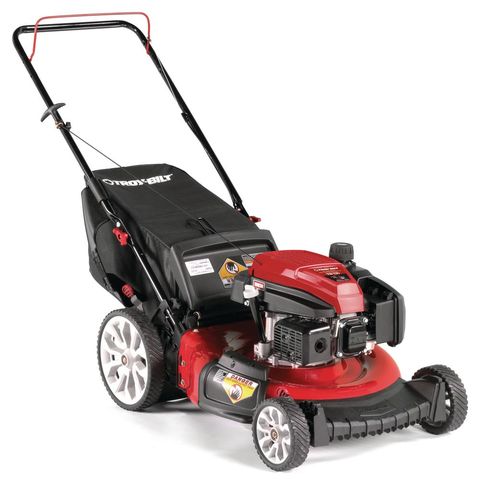
One summer day, I was mowing my lawn, feeling like a real manly man with my well-oiled machine.
But then, disaster struck.
The engine started making strange noises and smoke was pouring out of it.
I panicked and called my neighbor, who happens to be a mechanic.
He asked me what kind of oil I had been using, and I proudly told him “SAE 30, baby!”.
He just chuckled and shook his head.
Turns out, I had been using the wrong oil all along, and it was slowly killing my mower.
So, is SAE 30 good for your lawn mower? Let’s find out.

What is SAE 30 Oil?
SAE 30 is a type of motor oil that is specifically formulated for use in small engines like lawn mowers, generators, and other outdoor power equipment.
It is a monograde oil, which means that it has a single viscosity rating.
In this case, the “30” in SAE 30 refers to the viscosity of the oil when it is hot.
This type of oil is typically recommended for use in engines that operate in temperatures above 40°F (4°C).
Is SAE 30 the Best Oil for Your Lawn Mower?
Well, that depends on a few factors.
First of all, you should always consult your mower’s owner’s manual for specific oil recommendations.
Different manufacturers may have different requirements for their engines.
That being said, SAE 30 is a popular choice for many small engines.
One of the benefits of using SAE 30 is that it is widely available and relatively inexpensive.
It also has good lubrication properties, which can help extend the life of your engine.
However, if you live in an area with very hot or very cold temperatures, you may need to use a different type of oil.
Personally, I’ve had good experiences using SAE 30 in my lawn mower.
But, as I learned the hard way, it’s always best to double-check the owner’s manual or consult with a professional mechanic.
| Oil Type | SAE 30 | 10W-30 |
|---|---|---|
| Viscosity | High | Medium |
| Temperature Range | 40°F and higher | Below 40°F |
| Usage | Recommended for warmer climates and older engines | Recommended for all climates and newer engines |
| Benefits | Good for high-temperature, low-stress conditions | Better protection in cold weather and high-stress conditions |
My Personal Experience with SAE 30 Oil
I used SAE 30 oil in my lawn mower for a long time without any issues.
However, I later learned that my mower actually required a different type of oil.
I was lucky that I didn’t cause any permanent damage to the engine, but I definitely learned my lesson.
After that experience, I learned that SAE 30 is not necessarily the best choice for all small engines.
Some newer models may require synthetic oil or a different viscosity rating.
So, if you’re not sure what kind of oil to use, it’s always best to check the manual or ask a professional.
FAQs about SAE 30 Oil and Lawn Mowers
What happens if I use the wrong type of oil in my lawn mower?
Using the wrong type of oil can cause serious damage to your engine.
It may lead to increased wear and tear on the engine components, reduced lubrication, and even engine failure.
Always consult your owner’s manual for oil recommendations.
Is synthetic oil better than SAE 30?
Some newer lawn mower models may require synthetic oil for optimal performance. Synthetic oil generally has better wear protection and
viscosity stability compared to conventional oils. However, using synthetic oil in a lawn mower that is not designed for it can actually cause harm to the engine.
Consult your owner’s manual to determine whether synthetic oil is recommended for your lawn mower model.
How often should I change the oil in my lawn mower?
It’s recommended to change the oil in your lawn mower after every 50 hours of use or at least once a year. However, you should always refer to your owner’s manual for specific recommendations for your lawn mower model.
Can I mix SAE 30 with other oils?
While it is possible to mix SAE 30 with other oils, it is not recommended as it can change the oil’s properties and affect its performance. It’s best to stick to the oil recommended for your lawn mower in the owner’s manual.
Can I use SAE 30 in my car?
SAE 30 is designed for use in small engines like lawn mowers and should not be used in cars. Cars require oils with different viscosities and additives to protect their engines.
Conclusion: Keep Your Lawn Mower Running Smoothly with the Right Oil.
Choosing the right oil for your lawn mower is crucial to keeping it running smoothly and avoiding costly engine repairs. Always consult your owner’s manual for oil recommendations and follow the recommended oil change intervals.
Remember, using the wrong oil can cause serious damage to your lawn mower engine, leading to decreased performance, reduced engine life, and more frequent repairs.
So, whether you choose SAE 30 or 10W-30 for your lawn mower, make sure to use a high-quality oil that meets your engine’s requirements.
That’s the difference between SAE 30 and 10W-30, and how to choose the right oil for your lawn mower.
Happy mowing!