
Two summers ago I put a stopwatch on my phone and timed the front yard. Just the front, not the whole acre.
It took me 52 minutes (honestly, I figured 30). The open grass, the part you’d picture when somebody says “mowing,” took about 26 minutes of that. Half. Not even close to what I expected. The rest was backing up around a maple, nosing into the corners of a flower bed, and then walking the whole thing again with the string trimmer.
So the mower wasn’t the slow part. The yard was.
That’s the thing nobody tells you when you shop for a faster mower. A wider deck or a zero-turn helps on open grass, and does pretty much nothing for the five trees, the square beds and the strip along the walk that you trim by hand anyway. Here’s what I changed out front, in the order I’d do it again, and why each one comes off the clock.
Time Your Mow Before You Dig Anything
Do this first. Seriously. It’s free, and it tells you where your time actually goes.
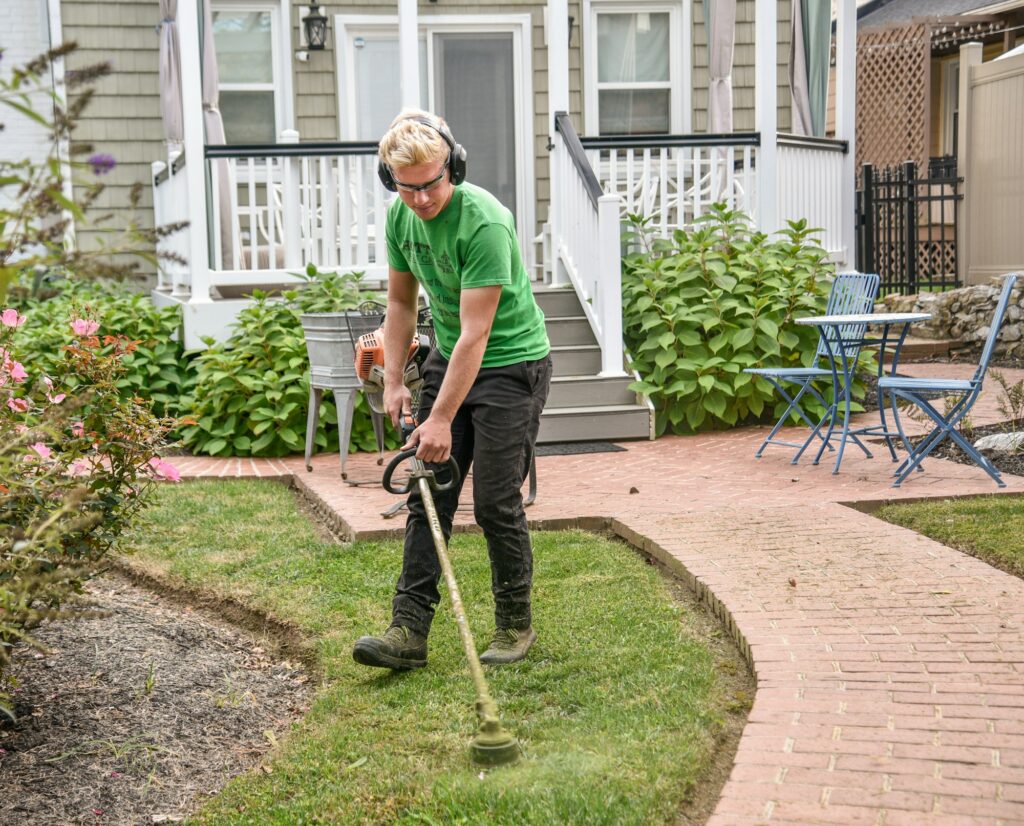
Mow the way you always do. Then write down two numbers: minutes on the mower, and minutes with the trimmer. If you’re feeling thorough, note the spots where you stop, back up, or make a little three-point turn. Those are the spots that cost you.
Mine were easy to find once I looked (and a little embarrassing). Every tree in the lawn was a slow lap and a trimmer stop. Every square corner on the bed by the porch was a back-up. And the strip of grass between the walk and the bed, maybe 30 inches wide, was too narrow to mow in one pass with the deck I’ve got, so it got trimmed with the string trimmer every 7 days from May through September, every single week.
This is the cheapest check first, same as with a mower that won’t start. You don’t buy a carburetor before you check the gas, and you don’t redo a yard before you know which part is slow.
Put a Mulch Ring Around Every Tree in the Lawn
If you only do one thing on this list, do this one.
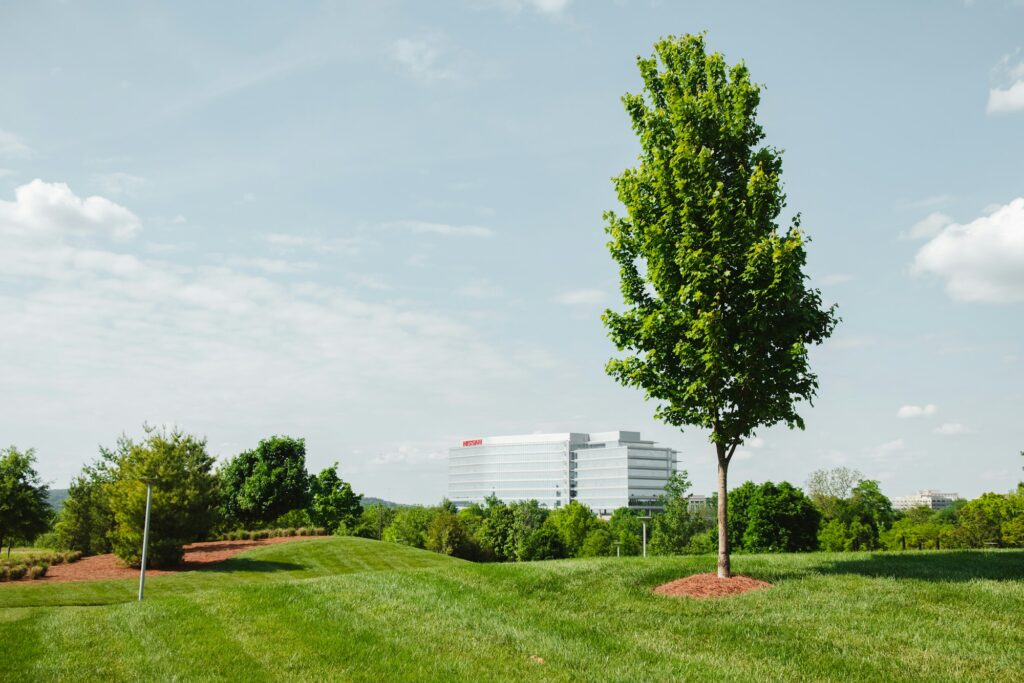
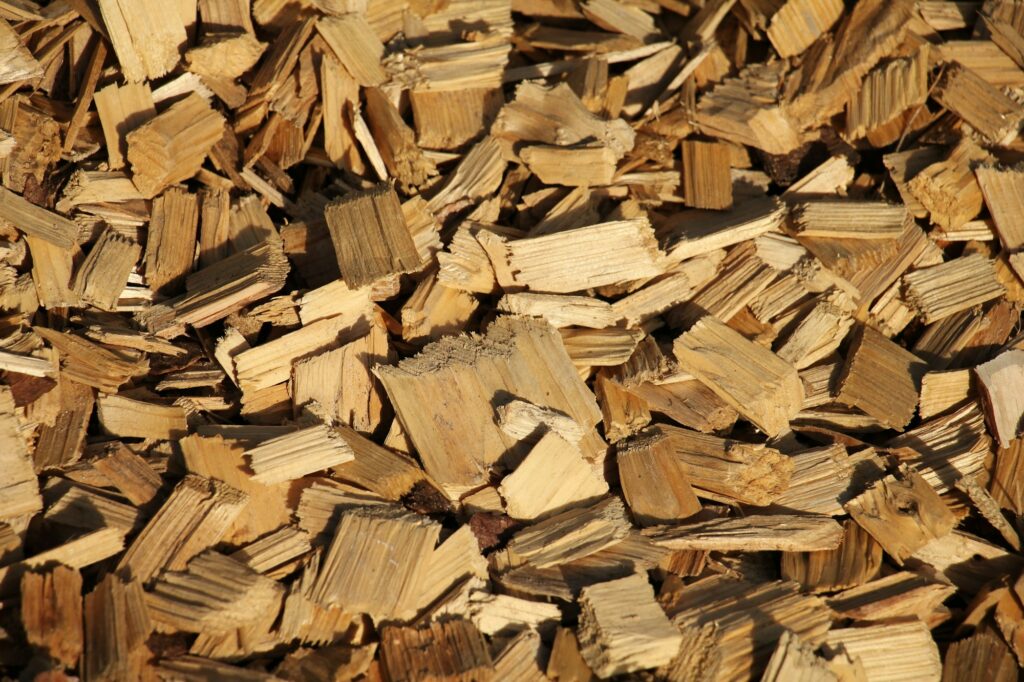
K-State’s turf team says trees in a lawn should get a mulch ring, partly because it keeps string trimmers and mowers from getting too close to the trunk and damaging it. Their rule is a ring at least 3 feet across for every inch of trunk caliper. So a young tree with a 2-inch trunk gets a ring 6 feet across.
They also say how to build it. Keep a 4- to 6-inch gap between the trunk and the start of the mulch, shaped like a donut, and lay the mulch 2 to 4 inches deep. Don’t pile it up against the bark in a cone (they call that volcano mulching, and it’s everywhere). The mulch breaks down over the year, so it gets topped up once a year.
UF/IFAS Extension in Hillsborough County gives a slightly smaller ring for its yards, 2 to 3 feet out from the trunk at 2 to 3 inches deep after it settles. Either way, the point is the same. The mower runs around a clean circle instead of a trunk, and you stop trimming at the base of every tree.
For big established trees, K-State says the ring doesn’t have to follow the size rule. It just needs to be wide enough to keep the mower off the trunk. When you cut the ring into existing grass, take the sod off the top few inches carefully so you don’t tear up roots.
My five trees took one Saturday, about 5 hours start to finish, and a trailer of wood chips (the tree service down the road gives them away). Honestly, it was the best afternoon of yard work I’ve done. If you’re not sure what to put down, our breakdown of what kind of mulch is best for landscaping covers the options.
Trade Sharp Corners for Curves You Can Mow in One Pass

A square bed looks tidy on paper. On a mower, it’s four stops (ask me how I know).
UF/IFAS says to replace sharp corners with gentle curves, which makes the lawn easier to mow and cuts down on trimming in tight spots. Their tip for laying it out is the one I used: put a garden hose on the ground, push it around until the curve looks right, then cut the new edge along it.
Here’s the test I use. If my zero-turn can follow the edge in one smooth pass without stopping, the curve is wide enough. If I have to stop and back up, the curve is too tight, and I move the hose out 12 inches and try again.
My zero-turn has a deck 42 inches wide and turns in place, and even it needs room. A riding mower with a wide deck needs gentler curves than a zero-turn does, so if that’s what you run, go wider than you think. Same with a push mower, kinda. You can turn it on a dime, but every tight turn is still a turn.
Lay a Mowing Strip Along the Beds
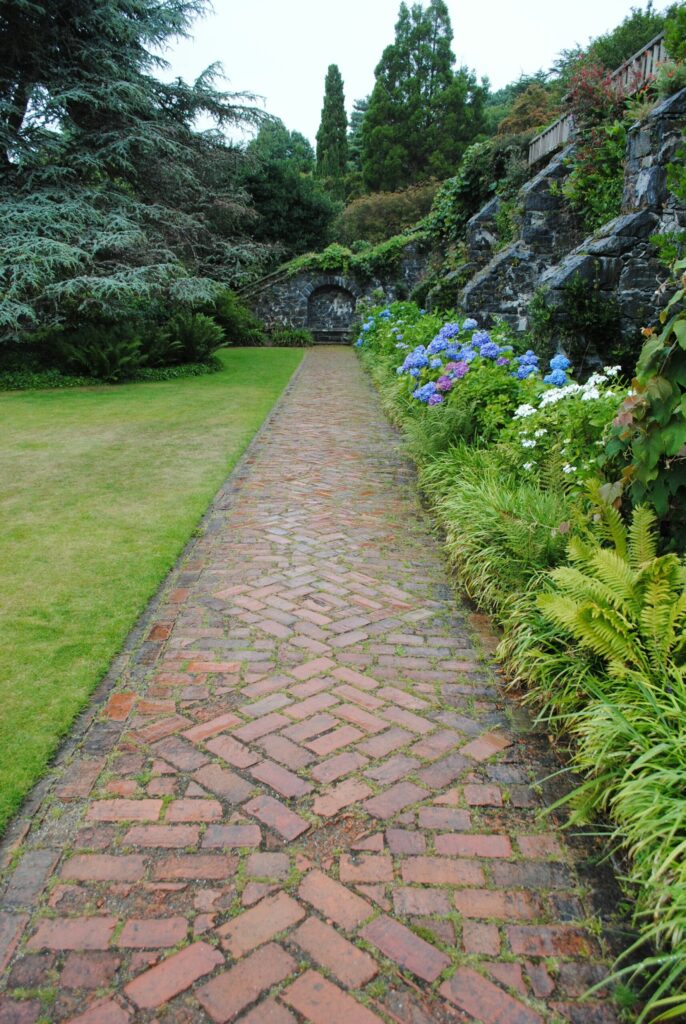
This one is the most work, and it’s the one that ended my weekly trimmer walk.
A mowing strip is a narrow, flat border between the lawn and a bed, made of brick, concrete or stone pavers. UF/IFAS says it cuts down on trimming, gives a clean edge between the lawn and the bed, and keeps grass from creeping into the bed. The detail that matters: set it level with the lawn, so the mower can run along it.
Level is the whole trick. With one wheel on the strip and the other on the grass, the deck hangs over the edge and cuts the grass right to the bed. No trimmer. If the strip sits even 1 inch proud, the wheel bumps up on it and the deck can scalp the grass next to it.
I used plain concrete pavers, 12 inches square, and set them on sand, a few inches at a time, along the bed by the porch. Took me two weekends and one sore back (worth it). I’d do it again tomorrow.
One mower thing while you’re at it: if you run along a strip with the deck overhanging, check your overlap on the next pass. Our post on whether you should overlap when mowing goes through how much.
Fewer, Bigger Beds Instead of Little Islands

Every little island bed in a lawn is another lap. So is every lone shrub.
UF/IFAS says to group plants in large masses or drifts instead of scattering them through the lawn, which means fewer obstacles to mow around. UF’s “Twenty-Two Ideas for a Low-Care, Low-Cost Landscape” goes further. It suggests picking 10 to 15 plants and using them in large masses, repeated through the yard, so the beds all take the same care.
It also says to plant a bit closer than the usual “barely touching at full size” spacing. Its rule of thumb is to space plants at 85% of the high end of their spread. A shrub that spreads 5 to 10 feet gets planted 8.5 feet apart, center to center. The foliage closes in, shades out weeds, and you spend less time pulling them.
Out front, I pulled two small beds and a lone shrub out of the middle of the lawn and moved the plants into the big bed by the porch. That one change took out more mower stops than anything except the mulch rings.
Groundcover on the Slope and Under the Shade Tree
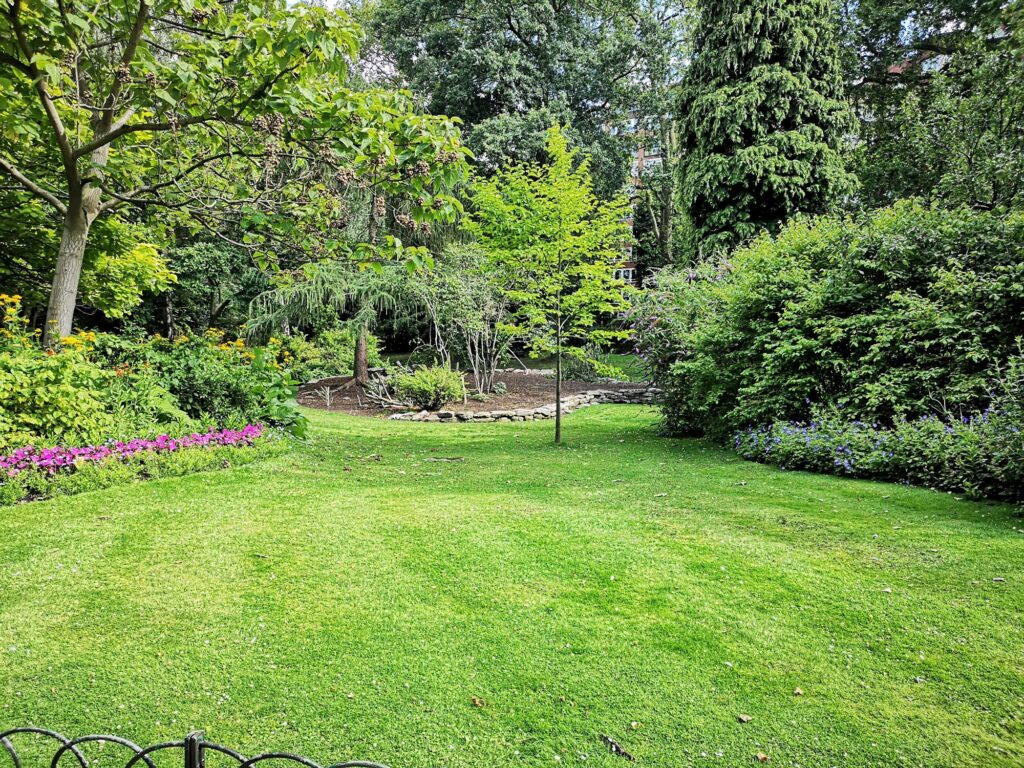
Some grass just doesn’t want to be there. The patch under a big shade tree. The bank by the road that’s too steep to mow comfortably.
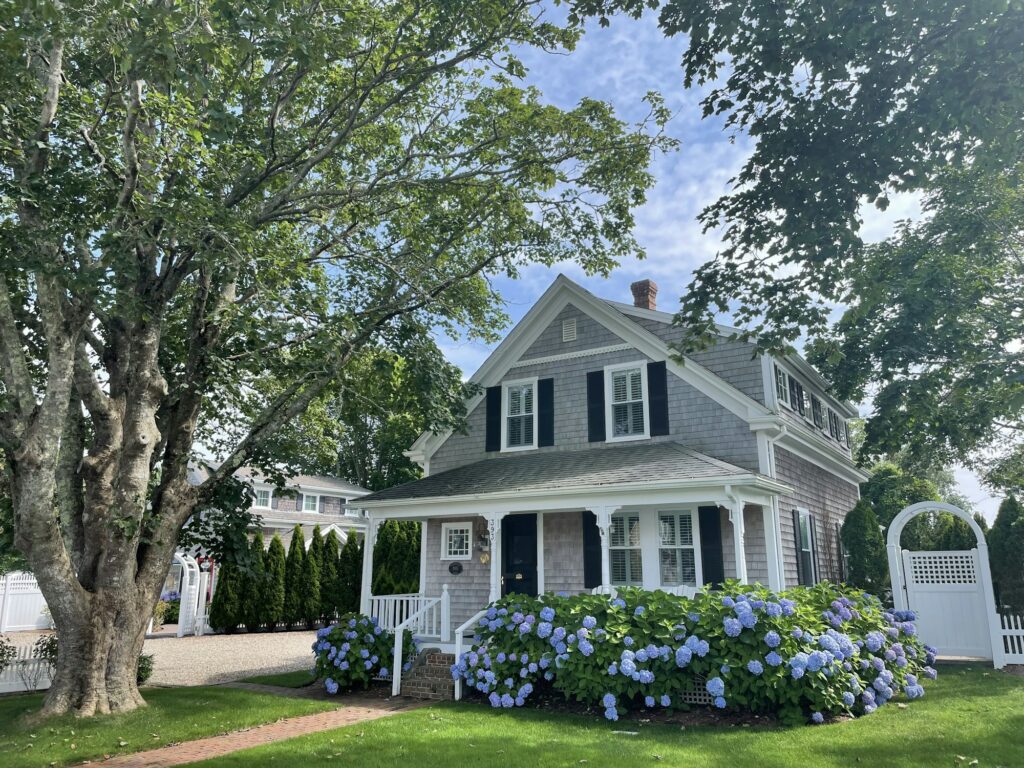
UF/IFAS says to use groundcovers instead of grass on slopes, shady spots and poor soil where grass struggles. You mow less, and on a slope you get better erosion control too.
I’m not a fan of mowing steep banks, and I’ve written about why. If you’re not sure where your own line is, read what’s the steepest slope you can safely cut before you decide that bank needs grass on it. The owner’s manual for your mower has a slope limit in it too, and it’s worth looking up.
Under my big maple, the grass gave up years ago anyway. It was mostly moss and roots, and every mow I’d duck under the low branches with the deck tilted on a root. I put a groundcover in there instead, and now the mower doesn’t go under that tree at all. Nope, not once this year.
Pick a groundcover that grows in your area. Your county extension office is the right place to ask, since what works in Florida won’t always work up north.
What Changed on My Mowing Day
I timed it again this summer, same yard, same zero-turn, same stopwatch.
It took me 31 minutes, down from 52. The open grass took about the same time it always did. Nearly all of the 21 minutes I got back came from the trimmer and the back-ups. The trimmer only comes out for the edges along the walk and the driveway now, and some weeks I skip it.
Fewer stops and fewer bumps also means a lot less backing and turning, which I figure is easier on the belt and the spindles (my guess, not a lab test, but it makes sense).
One thing I didn’t do was buy a bigger deck. Out front, a wider deck would’ve meant more trimming, not less, since it fits through fewer gaps between the beds and the trees. Look, a bigger mower makes sense on the open back acre. The front was a layout problem.
If you’re thinking about a new mower to save time, do the stopwatch first. Turns out the cheapest speed upgrade on my place wasn’t a mower at all. It was a trailer of wood chips, a garden hose and a stack of pavers.