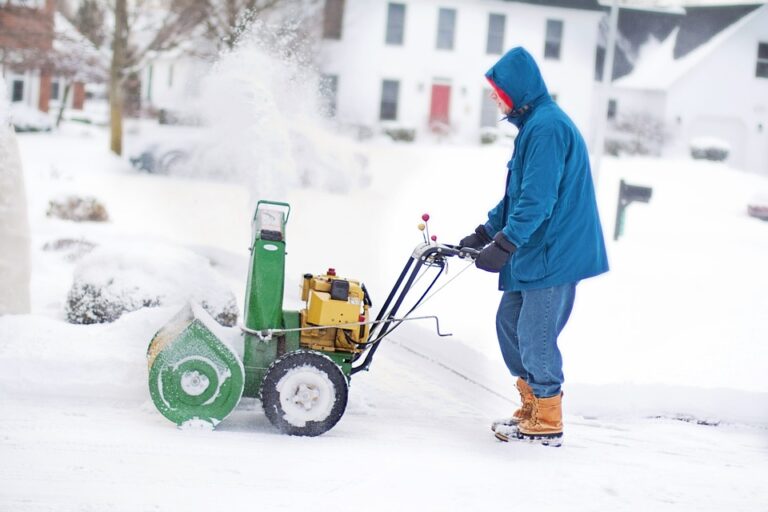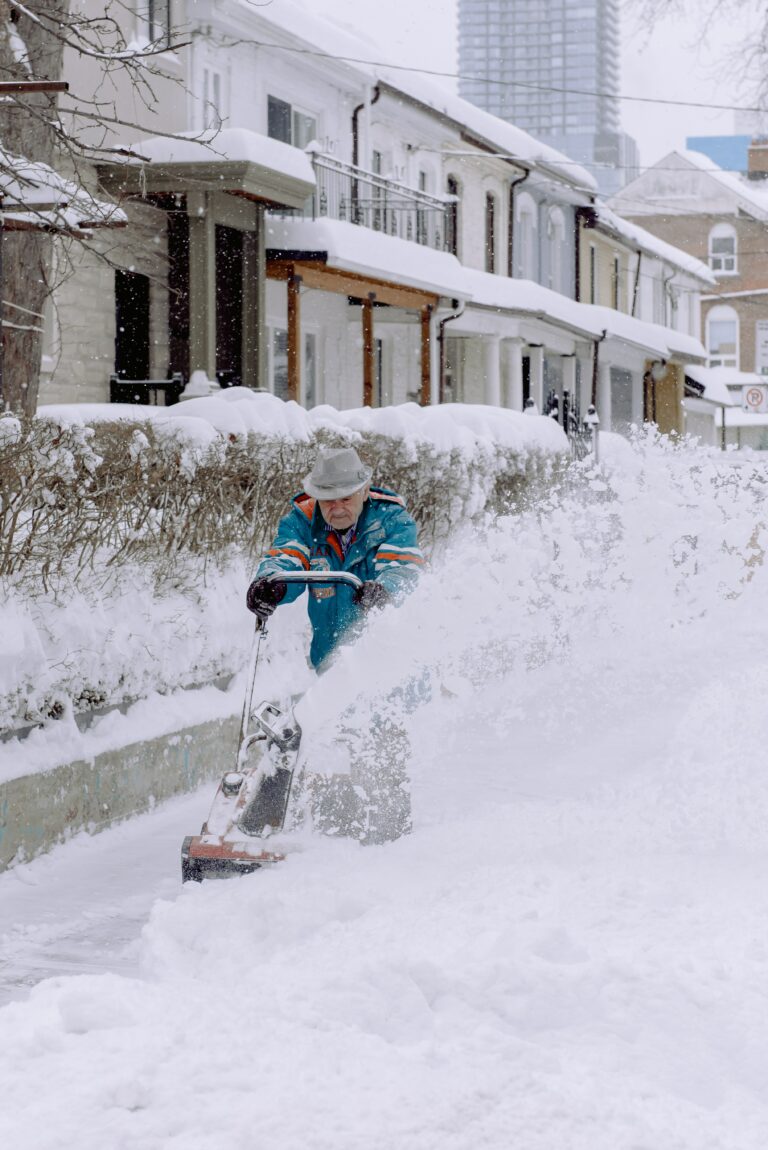

A single-stage snow blower picks snow up and throws it in one motion, so it’s lighter and cheaper, and it’s great on a short paved driveway that gets a few inches at a time. A two-stage snow blower breaks the snow up first and then fires it out with a separate fan, so it handles deep snow, wet snow and gravel. That’s the whole difference.
Your driveway decides which one you need.
I keep about an acre of lawn running myself, with a riding mower, a zero-turn, an old push mower and a snowblower that lives in the corner of the garage nine months a year. I’m not a certified tech and I don’t sell any of this. I just do my own work because dealer labor adds up fast once you own more than one engine.
Here’s how to pick between the two by snow depth and the surface you’re clearing, plus where it’ll live and the upkeep nobody mentions in the store.
What the Stage Count Actually Means

The stage is just how many steps the machine takes to move snow. That’s it.
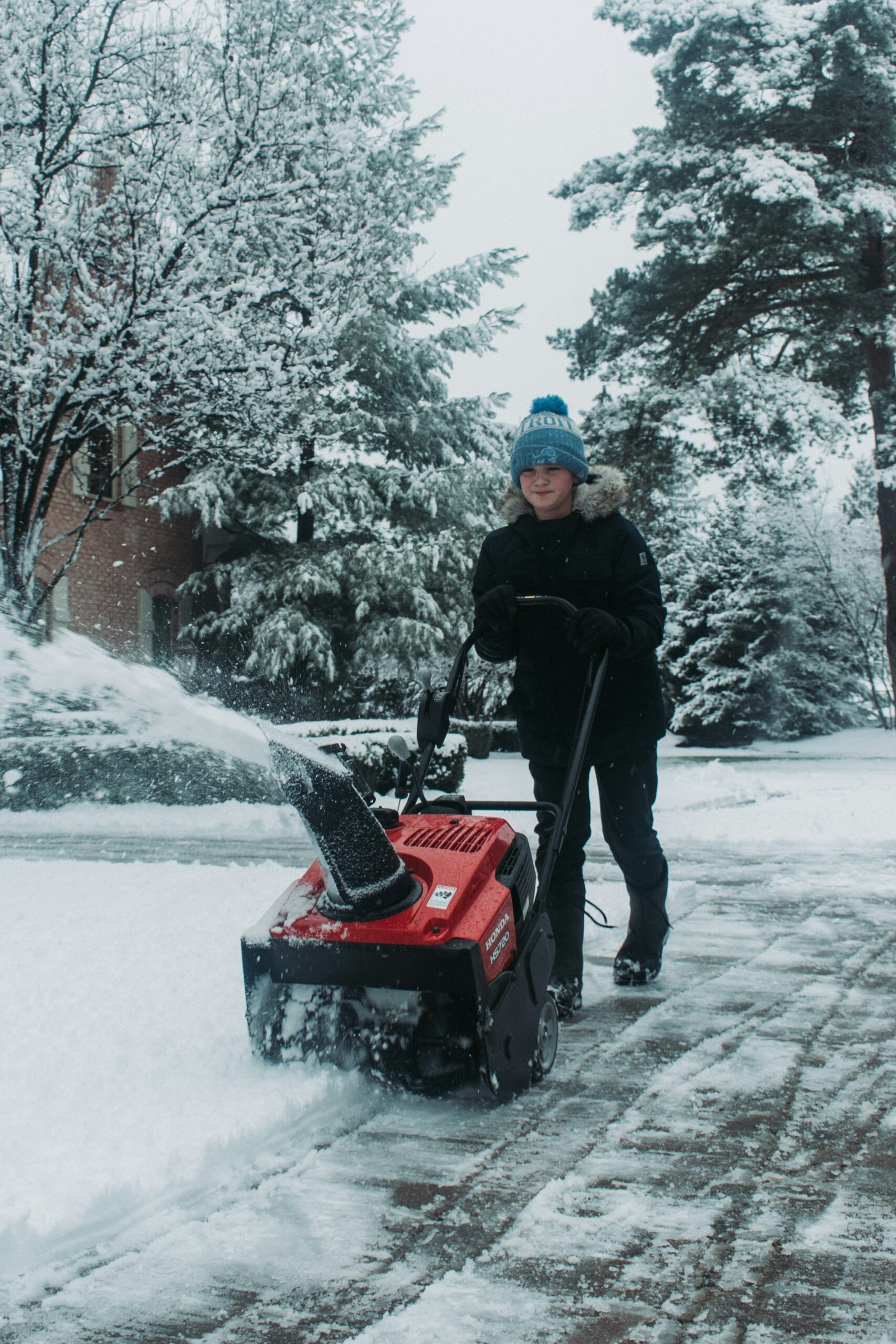
On a single-stage, the auger does everything. It spins at the front, scoops the snow and flings it straight out the chute. The paddles run close to the ground, which is why a single-stage cleans right down to the pavement.
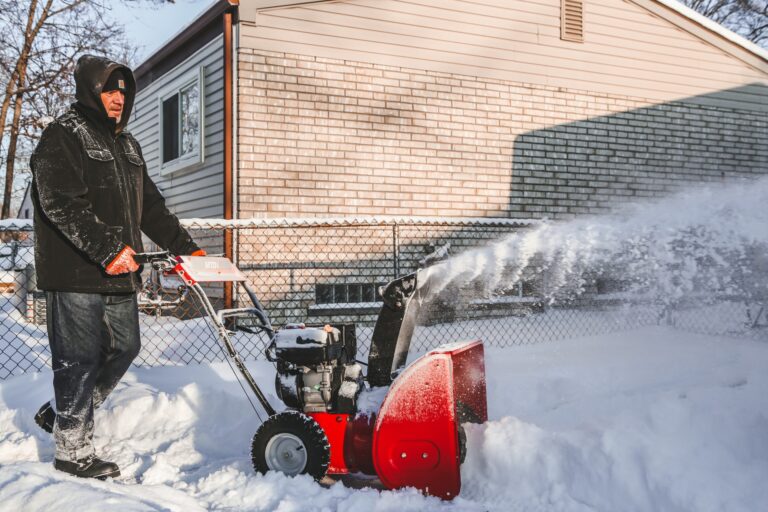
On a two-stage, the auger only gathers. Serrated steel augers break up snow and ice and pull it into a high-speed impeller, a fan behind them that throws it out the chute. Splitting the job lets each part be bigger and stronger, and it’s why the two-stage can chew through a drift that would stall the other one.
There’s also a three-stage, which adds an extra accelerator in front of the impeller. For most homeowners it’s more machine than they’ll ever need.
Start With How Much Snow You Usually Get

Snow depth is the first question, and the line isn’t fixed. You’ll see single-stage machines rated anywhere from 6 inches to about 9 inches of snow, a compact two-stage for about a foot, and a three-stage for up to 18 inches.
The gap between 6 and 9 inches is the snow itself. Light, fluffy snow at 8 inches is fine for a single-stage. Wet, heavy snow at 8 inches will clog it, and wetter snow gives these smaller machines trouble long before they hit their rated depth.
So think about your typical storm, not your worst one. If most of yours drop 3 to 5 inches of powder, a single-stage will do fine and you can shovel the rare big one. If you get regular foot-deep storms or lake-effect snow, don’t talk yourself into the smaller machine to save money.
A Gravel Driveway Settles It

If your driveway is gravel, buy a two-stage. A single-stage is most appropriate for paved surfaces like sidewalks and patios, because those paddles that scrape so nicely on asphalt will scoop up gravel and throw it. Your garage door, your car and your neighbor’s window won’t enjoy that.
A two-stage rides on skid shoes, two adjustable plates bolted to the sides of the auger housing. On gravel you raise the skid shoes so the scraper edge clears the surface. The machine leaves a thin layer of snow behind, but the stones stay put.
For steep or rough drives, a tracked two-stage grips better than one on wheels. It costs more, and on a flat drive it’s money you don’t need to spend.
The Plow Pile at the End of the Drive

This is the part that sells people on two-stage machines.
Usually the hard way. After the town plow goes by, there’s a wall of packed, wet snow across the end of your drive, and it’s heavier than anything that fell from the sky.
A single-stage tends to ride up on it, bog down and spit out clumps. A two-stage is built for large driveways and heavy, wet snowfalls, and it eats through that pile a few inches at a time.
If your house sits on a street the plow hits hard, count that pile as part of your storm. A machine that handles the driveway but not the last 10 feet still leaves you shoveling the worst part.
Size and Where It Lives in the Garage

Two-stage machines are wider and heavier. For a bigger driveway, look at a two-stage from 24 to 30 inches wide, and measure your garage or shed before you buy one. Floor space goes fast in a garage that already holds a mower, and a two-stage isn’t light to wrestle around a tight corner.
A single-stage is compact enough to hang a shovel next to and light enough to lift into a truck bed. It’s also the better tool for a deck, a patio or a short walk. Many have a rubber auger that’s safe for a deck’s finish, where steel would gouge it.
Plenty of folks with a long drive end up with both: the two-stage for the driveway and a small single-stage or a shovel for the steps and walks.
What Each One Leaves Behind

A single-stage scrapes the pavement nearly clean, which is nice on a sunny day when what’s left melts off. A two-stage doesn’t clean right down to the pavement, so plan on a pass with a steel-edged shovel and some ice melt after.
That thin layer matters more than it sounds if your driveway slopes toward the street. Packed snow left behind turns into ice overnight, and a two-stage on a sloped drive is a two-step job every time.
Upkeep: Shear Pins, the Belt and Stale Gas

A two-stage has more parts, so it has more to look after. It also usually has a real drive system, with gears and wheels that pull it along, where many single-stage machines are pushed along by the auger biting the pavement and your arms doing the rest. The first one you’ll meet is the shear pin. It’s a weak bolt that connects the auger to its shaft, and when a rock or a frozen newspaper jams the auger, the pin breaks so the gearbox doesn’t. Keep a few spares in a bag zip-tied to the handle, and only use the size the owner’s manual calls for. A stronger bolt just moves the damage somewhere more expensive.
The belt is next. On both types, a slipping belt shows up as an engine that sounds fine and an auger that slows down in heavy snow. It’s a cheap part and an easy swap on most machines.
Then there’s stale gas (the same problem I see in mowers every spring). Old fuel left in the tank over summer gums up the carburetor, and come the first storm it won’t start. Run it dry or add stabilizer before you park it in April. Fuel stabilizer goes in a snowblower the same way it goes in a mower.
And one safety rule that never changes: if the chute clogs, shut the engine off, wait for everything to stop, and use the clean-out tool.
Never your hand. Before any real work on it, pull the spark plug wire too.
Gas, Battery or Cord
Almost every two-stage you’ll find runs on gas. If you’re curious what’s under the cover of one brand, I looked into who makes Toro’s snowblower engines. Single-stage machines come in gas or battery (a few still plug into the wall), and for small jobs the electric ones are honestly pretty good now. For snow that generally doesn’t go past four inches, even an electric model will do, and that covers a lot of walks and short drives.
A battery machine starts every time, never needs stale gas drained, and doesn’t need an oil change. What it can’t do is run forever. Runtime drops in the cold and in heavy snow, so on a long drive you’ll want a second battery or a plan to stop and charge. Look at how long the maker says one battery lasts and assume less in a real storm.
A corded machine is the cheapest of all.
It’s also the most annoying to use, because you spend the whole job flipping 50 feet of cord out of the way so you don’t chew it up.
If I had a small paved drive and storms that stayed light, I’d go battery and skip the carburetor problems for good. Everybody else, it’s gas.
Which One I’d Buy for Your Driveway

Here’s how I’d call it, cheapest check first.
- A short paved driveway with storms that usually stay under 6 inches: a single-stage. It’s lighter and cheaper, and it gets the pavement clean.
- A two-car paved drive that sometimes gets 8 to 12 inches, or a plow pile at the street: a compact two-stage.
- Any gravel driveway: a two-stage with the skid shoes raised. No single-stage, no matter how short the drive.
- A long, steep or rough drive with deep storms: a full-size or tracked two-stage, 24 to 30 inches wide.
Once you know the type, the brand is the next question, and I went through the most reliable snow blower brands separately. If you’re torn between the two types, the plow pile and the gravel are the tiebreakers. Nobody I know ever wished they’d bought the smaller machine in February.