
Cut back most ornamental grasses in late winter or early spring, right before the new green shoots show up. Leave them standing all fall and winter. That’s the answer from Iowa State, Kansas State and the University of Illinois, and it’s what I do along my driveway every year. Fall cutting isn’t wrong, exactly. You just give up a lot and gain almost nothing.
I’m on about an acre, and most of my weekends go to keeping a riding mower, a zero-turn and a push mower alive. I’m no horticulturist and not a certified mechanic either. The grasses are the low-effort part of my yard, which is why I planted them. They get one real job a year, and the timing of that job is what this whole question is about.
Why I Leave Them Standing Through Winter

Here’s the part most people don’t know. Chris Enroth at University of Illinois Extension asked what happens if you never cut your grass back in spring. His answer was nothing. It doesn’t affect the overall health of the plant, and once the new blades grow up, they hide last year’s foliage.
So the old stems aren’t hurting anything over winter. They’re helping. Illinois says leaving grasses standing protects the plant’s growing points at the soil line from extreme cold, and the stems serve as habitat for beneficial insects and pollinators.
Iowa State makes the looks argument. Let grasses and their flower heads stand all winter, its extension says, because even tan and dead, they’re quite attractive after a snowfall. I’ll back that up. The two big clumps by my mailbox are honestly the only thing in the yard worth looking at in January.
There’s one practical reason too. In fall I’m already busy with leaves and winterizing three mowers, plus getting the snowblower ready. Moving the grass job to spring takes one chore off the busiest weekend of my year.
Already cut yours this fall? Don’t sweat it. You gave up the crown protection Illinois talks about, so I’d tuck a mulch over the stubble before the hard cold sets in. The RHS describes mulch as a layer at least 2 inches thick, put down between late autumn and late winter, and frost protection is one of the reasons it lists.
But Don’t Wait Too Long in Spring

Spring is the right time, and there’s a real reason not to skip it. Illinois points out that old foliage left on the plant can delay the crown’s warming, and with it the new growth, by as much as 3 weeks. Clear the old stuff and the sun hits the crown sooner.
The deadline is the new growth. Iowa State says to cut back in early spring before new growth appears, which works out to April in Iowa. K-State’s ornamental grass bulletin says late winter to early spring, February to March in Kansas, before new growth starts to show. Your date depends on your climate, so watch the plant, not the calendar.
Every spring I walk out and pull the old stems apart at the base of each clump. If I see green poking up, it’s time, and I’m a bit late. Cut after the shoots are tall and you’ll lop the tips off this year’s leaves. They’ll grow back with blunt, chopped-off ends that look off all summer.
Warm-Season and Cool-Season Grasses Wake Up at Different Times

This is where the timing gets a little more specific. K-State splits ornamental grasses into two groups. Cool-season grasses start growing in late winter to early spring, when it’s cool and moist, and they flower in late spring to early summer. Warm-season grasses come out of dormancy later in spring, do most of their growing in summer and flower late in the season.
That means your cool-season grasses want the earlier cut. Feather reed grass is one, and K-State’s own variety table lists Karl Foerster as cool-season. Get to those first, as soon as the worst of winter is over.
Not sure which kind you’ve got? Check the plant tag, or just watch your yard in spring. K-State says one way to tell them apart is when the plant is actively growing. Whatever greens up first is your cool-season grass.
Warm-season grasses can wait. The Royal Horticultural Society notes that a few are slow to get started, like Pennisetum orientale, and the old stems protect the crown from cold, so it says to delay clipping those until late April. For Miscanthus, the RHS says mid-March to April is fine.
Evergreen grasses and sedges are the exception. The RHS says they usually need only a tidy-up and don’t always respond well to hard pruning. On small ones, like Carex, it says to pull out the dead leaves by hand, comb them out with your fingers or a rake, and leave the living green foliage alone.
How Short to Cut, and How to Do It Without a Mess
The sources don’t agree on one height, so here’s the spread. Iowa State says to cut to within 2 to 4 inches of the ground. K-State says 6 to 8 inches. On deciduous grasses the RHS says to cut the old stems as low as possible. I land around 4 to 6 inches on my big clumps, low enough to look clean and high enough that I’m not hacking into the crown.
Pick a height and stick with it, and you’ll be fine. Honestly, nobody’s out there with a ruler.
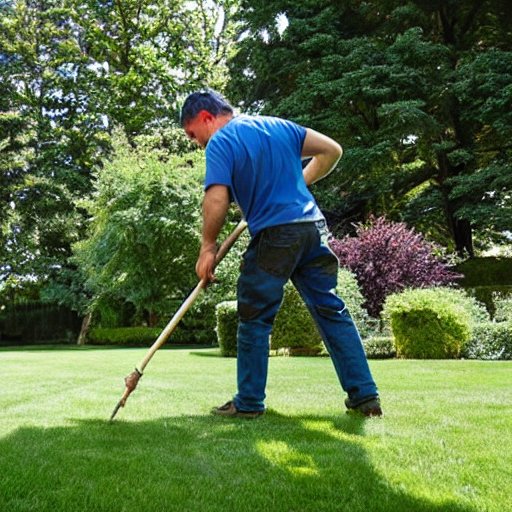
The best trick I’ve picked up came from that same Illinois article. Tie the clump into a bundle first, then cut at the base. Enroth says the bundle is easy to carry and makes cleanup a breeze, and he’s right. I wrap a bungee cord or a length of twine around the middle, cinch it tight and cut under it (you’ll want a second person the first time, trust me). The whole thing comes away like a big broom instead of a thousand loose stems blowing across the lawn.

Pampas grass needs more care. The RHS says large evergreen kinds like pampas benefit from a hard cut each early spring, as far back as you can go without damaging new growth. Wear eye protection and thick gloves, because the leaf blades have sharp edges, and use loppers on the tough stems. Don’t burn it, either. The RHS warns that can damage the crown.
Getting the Hedge Trimmer Ready After Winter
Iowa State lists hand shears, lopping shears or hedge trimmers for the job. On one or two small clumps, hand shears are fine. On anything the size of a bathtub, you’ll want the hedge trimmer, and so will your wrists.
That’s where spring cleanup usually goes sideways for me. My gas trimmer sits from October to March, and if I didn’t run it dry in the fall, it’s sitting on stale gas. When it won’t start, I go cheapest check first. Fresh fuel, then the spark plug, then the air filter. Most springs it turns out to be the gas, which is kinda embarrassing every time.
Before I touch the blades, I pull the spark plug wire, or take the battery out of the cordless one. Then I check the owner’s manual for how the maker wants the blades cleaned and oiled. A clean, sharp blade slices through dry stems. A gummed-up dull one chews and grabs, and it’ll yank the clump right out of your hands.
If your clumps are old and woody, a light-duty trimmer will struggle. I put together a list of hedge trimmers for thick branches, and the same muscle works on a ten-year-old Miscanthus.
When the Middle Dies Out, Divide It
Sooner or later a clump goes hollow in the center, a ring of live grass around a dead middle. K-State says that’s the sign it needs dividing, which it puts at every three to five years depending on the grass. Illinois says grasses benefit from being divided every few years too.
Timing lines up nicely with the cutback. K-State says to divide while the plants are dormant, which is early spring for both warm-season and cool-season grasses, and cool-season ones can also be divided in fall. So I cut first, then dig. With the top gone you can actually see what you’re doing, and a sharp spade does the rest.
And you don’t need to feed them after. Iowa State calls ornamental grasses low-maintenance, and the RHS says established grasses on most soils rarely need extra feeding. Mine get nothing, and they’re doing fine (better than my lawn, to be honest).
What to Do With All Those Cuttings
A big clump makes a surprising pile. Mine go to the compost pile, but I cut the bundles into shorter pieces first. Whole stems three or four feet long sit there for ages, while short ones mix in and break down a lot faster.
Whatever you do, don’t run long stalks through your mower. A bundle of tough stems can wrap around the blade, and that’s a mess I’d rather not clear on my zero-turn. Leaves are a different story. If you’re dealing with those this fall, here’s how I go about mulching leaves with a lawn mower instead of raking.
So this fall, let the grasses be. Put the mowers away first (my mower winterizing checklist covers that), enjoy the clumps in the snow, and set a reminder for late winter. When the first green tips show at the base, bundle, cut and be done in an afternoon.