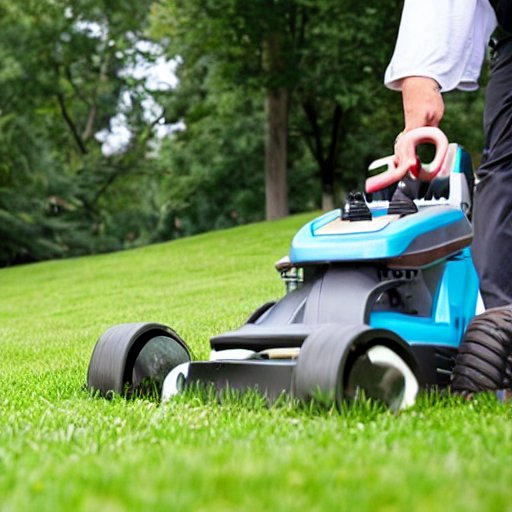

To landscape a small backyard with less lawn to mow, keep one simple patch of grass with smooth curves and turn the hard spots into mulched beds or ground cover. Put a solid edge around every bed, then lay a real path where you already walk. That’s the whole plan, and you can do it one corner at a time.
I mow about an acre, so you might wonder why I’m writing about a small yard. Honestly, it’s because I know where the time goes. It isn’t the long straight passes. It’s the corners, the tree trunks and that skinny strip by the fence where you back up and try again. On my zero-turn that’s the annoying part of the job. In a small yard, it’s nearly all of it.
What I know is what a mower will and won’t do, and that’s what shaped this plan.
Start With the Spots You Hate Mowing
Cheapest check first: walk your yard and ask which patches you’d happily never cut again. The obvious ones are places where grass doesn’t thrive anyway, like shade under trees, wet sections and that steep bank where you risk your life mowing every weekend.

Grass that’s already losing is the cheapest grass to give up, and that goes for a steep slope, bad soil or too much shade. If moss is moving in, that’s a sign the spot isn’t right for turf. Don’t fight it.
You don’t have to do the whole yard at once, either. Start small with one area and replant over months or even years. Take one patch this fall. Mow around it next season and see how it feels. Bet you’ll want to do another.
Keep One Simple Shape of Grass
Here’s my whole contribution to landscape design: round the corners. Every square corner makes you stop, back up and swing around with the blade running, so take the grass out of the corners and turn them into curved beds. A curve is one smooth turn. A square corner is a three-point turn, every single week.

Keep the lawn itself one plain shape, and let all the fussy stuff happen around it, off the grass.
Keep every strip of grass wider than the deck, too. My old push mower cuts 21 inches, so a 12-inch strip is a string trimmer job, forever. Leave enough for 2 passes (call it 40 inches with that mower) or get rid of the strip.
Then ask how much lawn you really use. Do you need grass for games, or are the side yards just unused space that borders the house? If nobody’s walked on it since spring, that’s your next bed.
Turn the Corners Into Mulched Beds
Whatever you cut off the corners becomes a bed. Mulch is about the cheapest ground cover you can buy, and it doesn’t need a blade. Put down 3 to 4 inches of shredded leaves, bark or wood chips. Under a tree, go lighter at 2 to 3 inches, out to the drip line, and the mulch keeps the mower off the trunk.

Not sure which kind? Here’s what kind of mulch is best for landscaping. If you’ve got trees, shredded leaves are free, and mulching leaves with a lawn mower is one more reason to keep the mower around.
Start along the fence if you’ve got one. That’s the worst trim job in most yards, and a bed there means no more scraping the deck on the posts. I’ve got more on that in fence line landscaping ideas.

Edge Every Bed
A bed with no edge turns back into lawn, kinda slowly and then all at once. A band of edging keeps turf from invading your plantings. It’s the piece people skip, and then they’re pulling grass out of the mulch by July.

Rock borders look great, and here’s where I’d push back a little. A loose stone is something your blade can hit or throw. So bed them in tight and keep the mower wheel on the grass side, then finish that last few inches with the trimmer. If you set a flat edging strip flush with the soil, one wheel can ride right on it and you skip the trimming.
Clip a rock anyway? Shut it off and pull the spark plug wire before you put a hand under the deck. Check the blade for a bend or a big nick. Then look up the torque spec for the blade bolt in the owner’s manual, because a blade that’s been hit and put back on loose is worse than a dull one.
Lay a Path Where You Already Walk
Look for the worn line. If you’ve got a worn footpath from the deck to the tool shed, or between the back door and the compost pile, think about a fieldstone or gravel path. The grass there was losing anyway, so you may as well stop reseeding it.

Set the stones low. If the tops sit level with the soil, the mower rolls right over and you never think about them again. Gravel is cheaper, but keep it boxed in with edging, because it migrates. One piece in the lawn is one more thing for the blade to find.

Those wood rounds look great, and I’d be sick about what they’d do to the deck. They sit proud of the grass, so you’d mow around each one. Either sink them flush, or give them a strip of mulch of their own.
Ground Covers for the Spots a Mower Can’t Reach
Ground covers spread but don’t grow tall, which means no mowing and little maintenance. They work on steep slopes, sharp angles, narrow driveway strips and small spaces the mower can’t get into. Got a real hill? My sloped backyard landscaping guide goes further.
Here’s one to watch. Vinca and pachysandra get suggested for shade all the time, but both types of periwinkle, plus Japanese spurge and carpet bugleweed, can be invasive, so I’d skip them. Check your own state’s list before you buy a flat of anything.
Turns out sedges are the neat trick here. They look like grass and don’t need frequent mowing. You’ll still have to weed and mulch until any ground cover fills in, so don’t expect a free ride in year one, and use an edge barrier to hold the spreaders back.
Give Up Some Lawn to a Patio or Raised Beds
Hard surface is lawn you never cut again, and it doesn’t have to be big. An 8-by-10 patio is 80 square feet you’ll never mow, trim or feed.

Raised beds are great, but put them in the right place. Set in the middle of a lawn, each box adds 4 corners to trim around.

Push them up against a fence or an existing bed, or mulch the whole area so they read as one shape. And leave a gap wider than the deck if you’ll mow between them. Measure before you build, including your gate. The owner’s manual lists your mower’s overall width, and it’s the chute side that catches you out.
Mow What’s Left Less Often
Less lawn means a shorter job, and you can stretch the time between cuts as well. US lawns cover more than 40 million acres, and they’re the largest irrigated crop in the country, so we’re all doing a lot of this. Here’s how to make yours easier:
- Mow high, at 2 1/2 to 3 inches, for deeper roots and more shade on the weeds
- Leave the clippings, unless they’re thick and wet
- Try a slow-growing grass like fine fescue or tall fescue, which takes fewer mowings
And do you still need the big machine? If you’ve cut your lawn down to a patch, a rider may be more mower than the job needs.

A walk-behind handles a small patch fine, and there’s no belt to replace. Here’s the difference between a walk-behind and a push mower if the names confuse you. Whatever you pick, a small lawn burns very little fuel, so stale gas becomes your main enemy. Buy a small can at a time, and read up on what gas to put in a push mower.
The front yard works the same way: see low-maintenance front yard landscaping. But start out back with the one corner you hate most. Get a bag or two of mulch and a shovel, and see how much shorter next week’s mow gets.
Sources: Gardener’s Supply, “Be a Grower, Not a Mower”; University of Maryland Extension, “Lawn Alternatives”; NC State Extension, Forsyth County Center, “Lawn Alternatives: Replacing or Reducing the Size of Your Lawn”; UF/IFAS Gardening Solutions, “Groundcovers”.